
Last updated: November 15, 2026
Choose frameless if you want the cleanest look and your wall framing can carry heavier tempered safety glass. Choose framed if you want the safest bet for water control and the least demanding install. Semi-frameless sits between them, but it is usually a style compromise, not a structural one. For this kind of shower door replacement, the real question is less about looks and more about what the wall studs can support.
I’m treating this as a framing-and-hardware decision, not a décor choice. A shower door that uses a continuous hinge and thick glass asks more from the wall than a light anodized aluminum frame with a track.
Key takeaways
- Frameless doors look lighter, but they depend more on solid wall studs and careful anchoring.
- Framed doors are the easiest path when you want better water containment and a simpler replacement.
- Semi-frameless is useful when you want some of the cleaner look without going fully frameless.
- If the wall backing is uncertain, framed is the safer call.
- The right choice depends on the shower opening, the condition of the walls, and how much splash the shower throws.
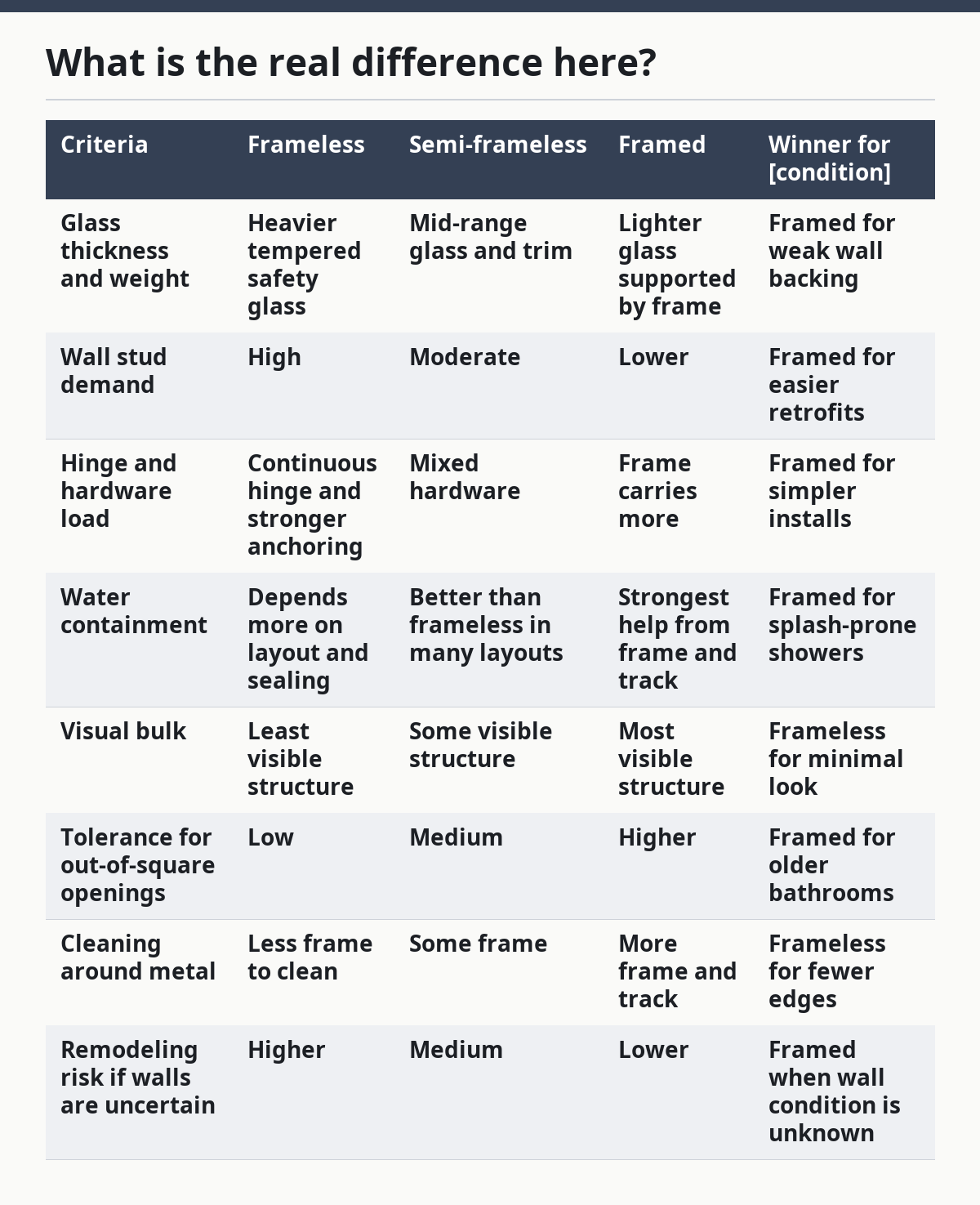
What is the real difference here?
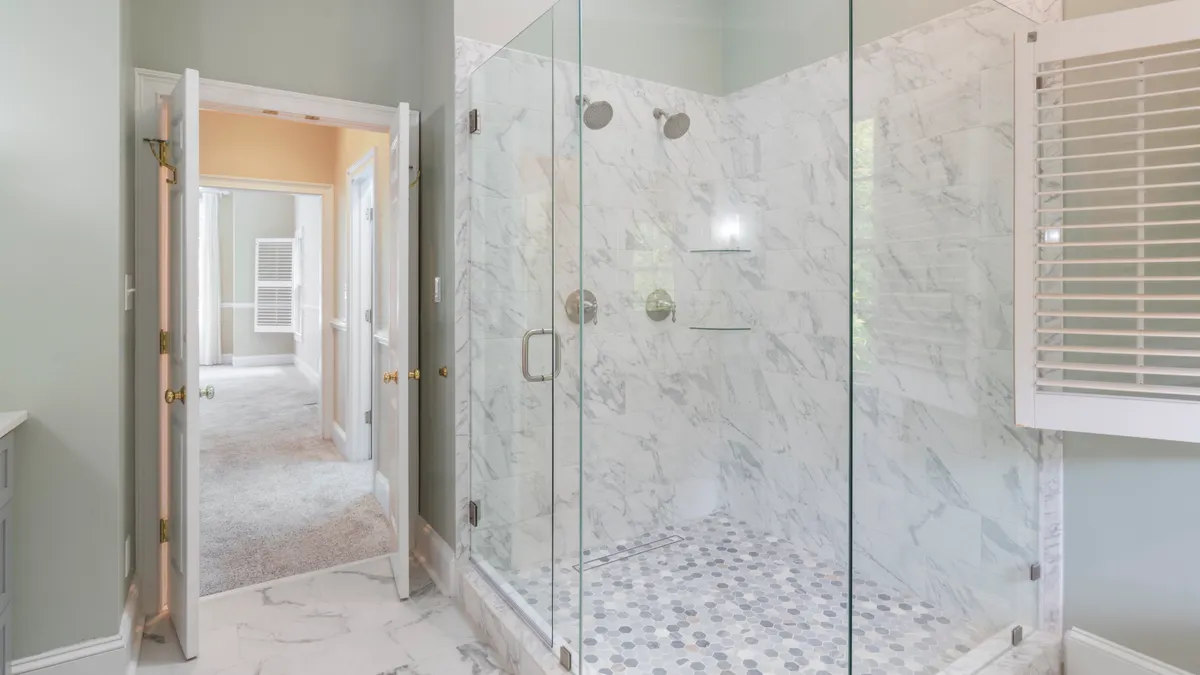
The real difference is how much structure the door needs and how much help it gets from the frame. Frameless shower door replacement usually means thicker tempered safety glass, a continuous hinge, and hardware that depends on the wall studs for solid support. Framed replacement uses an anodized aluminum frame around the glass, so the frame carries more of the load and helps keep water inside the shower.
That change matters more than most product pages admit. A framed unit can forgive a less-than-perfect opening better than a frameless one, because the metal frame gives the glass more edge support and gives the installer a more predictable path for fastening. Frameless doors can look sharper, but they are less forgiving if the opening is out of square or the wall backing is weak.
Here is the simplest way to think about it: frameless is a hardware-and-framing decision, semi-frameless is a hybrid, and framed is the practical default. That is why this comparison belongs in a shower door replacement guide, not just a style gallery.
| Criteria | Frameless | Semi-frameless | Framed | Winner for [condition] |
|---|---|---|---|---|
| Glass thickness and weight | Heavier tempered safety glass | Mid-range glass and trim | Lighter glass supported by frame | Framed for weak wall backing |
| Wall stud demand | High | Moderate | Lower | Framed for easier retrofits |
| Hinge and hardware load | Continuous hinge and stronger anchoring | Mixed hardware | Frame carries more | Framed for simpler installs |
| Water containment | Depends more on layout and sealing | Better than frameless in many layouts | Strongest help from frame and track | Framed for splash-prone showers |
| Visual bulk | Least visible structure | Some visible structure | Most visible structure | Frameless for minimal look |
| Tolerance for out-of-square openings | Low | Medium | Higher | Framed for older bathrooms |
| Cleaning around metal | Less frame to clean | Some frame | More frame and track | Frameless for fewer edges |
| Remodeling risk if walls are uncertain | Higher | Medium | Lower | Framed when wall condition is unknown |
Frameless shower door replacement: who it fits
Frameless wins when the room can support the door and the owner cares most about the open look. It is the best fit for a bathroom where the wall studs are in good shape, the opening is already close to square, and the goal is to reduce visual clutter around the shower. A continuous hinge and thick tempered safety glass are the usual signs that this is a more serious install, not a light swap.
The upside is obvious: less metal, less visual break, and a cleaner line from the shower opening to the rest of the room. That matters in a small bath where a bulky frame can make the shower feel boxed in. Frameless also tends to suit a more modern layout, especially when the tile work already has strong straight lines.
The drawback is just as clear. Frameless is the least forgiving choice when the wall studs are not where they should be, the opening is off, or the installer has to work around weak backing. If the wall cannot take the load cleanly, the hardware can become the weak point. It is also the wrong choice if the main goal is to stop splash from escaping with the least fuss. A fully frameless setup can be fine, but it asks more from both the installer and the wall.
Who should skip frameless? Anyone who wants the easiest retrofit, anyone with questionable framing, and anyone who values function over a minimalist look. A shower that gets heavy daily use, with lots of spray, is also a weak match if the layout already tends to leak water.
Framed shower door replacement: why it still wins a lot of jobs
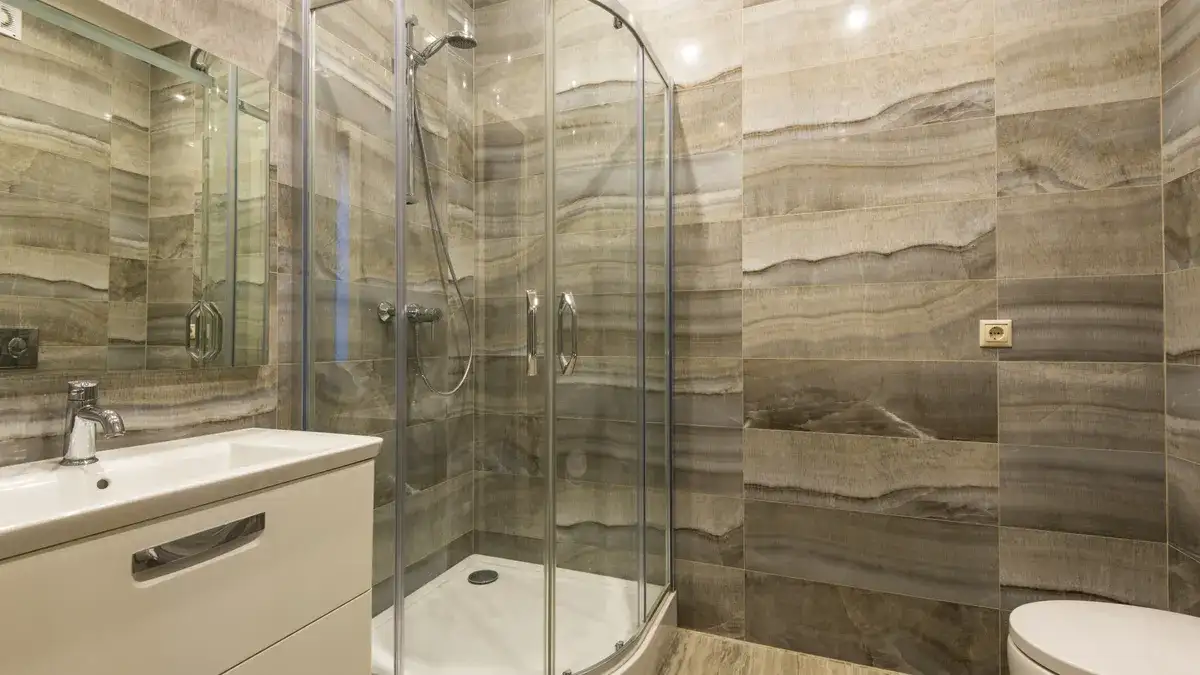
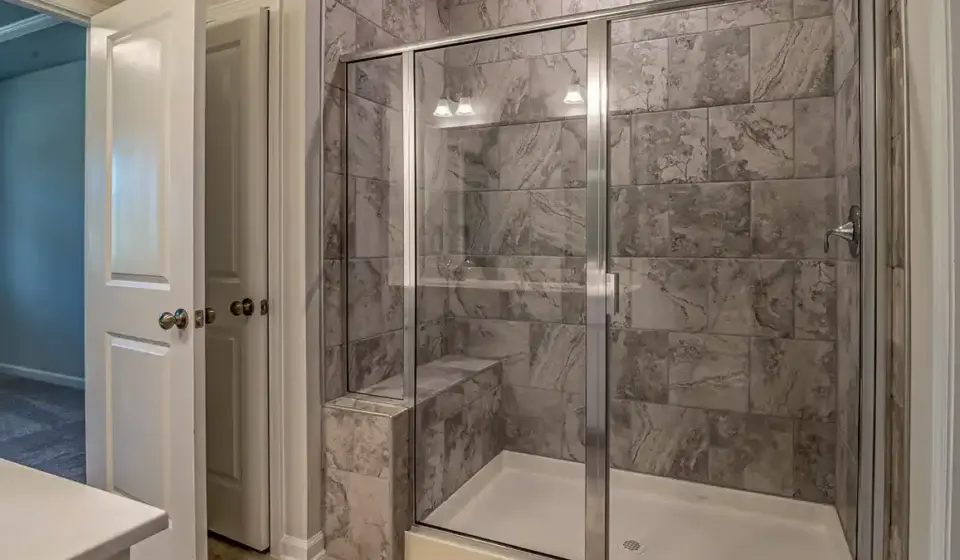
Framed wins when the job needs control, not drama. The anodized aluminum frame gives the glass a supported edge, which makes this the least demanding option for wall studs and the most predictable option when the bathroom is older or the opening is not perfect. In plain terms, framed is the workhorse.
This option is often the safer recommendation when the question is not “What looks best?” but “What can the walls handle without extra repair?” The frame helps with shower glass water containment too. In many layouts, the metal perimeter and track do more to hold spray where it belongs than a cleaner-looking frameless door does.
The trade-off is appearance. Framed doors are bulkier, and the metal can make the shower feel smaller. That is the price of easier support and better containment. There is also more frame and track to keep clean, which some owners dislike.
Framed is wrong for someone chasing a light, open, spa-style look. It is also not the first choice if the bathroom has already been designed around thinner hardware and wide glass lines. Still, when the wall condition is unknown or the shower opening needs a forgiving replacement, framed is the one I would trust first.
Semi-frameless shower doors: the middle ground that makes sense
Semi-frameless wins for buyers who want less metal without accepting all the structural demands of a fully frameless door. It keeps some framing around the edges, but not the full boxed-in look of a standard framed unit. That gives it a middle position in both appearance and installation difficulty.
This category makes sense when the owner wants a cleaner look, but the wall studs or opening do not make a pure frameless setup the smartest pick. It can also be a useful compromise when shower glass water containment matters, yet the bathroom would look too heavy with a full frame. In that sense, semi-frameless often solves the “I want less frame, but not zero frame” problem.
The weakness is that it can inherit the limits of both sides. It may not look as open as frameless, and it may not seal or support as confidently as framed. That means it can be the least satisfying choice if the buyer wants one clear advantage. It is especially weak if the real priority is a hard-wearing shower that gets daily abuse from steam, splash, and constant use.
Semi-frameless is best for a bathroom that is already in decent shape and where the owner wants a cleaner line than framed offers. It is not the right pick for the roughest openings, the most water-heavy showers, or any project where the installer needs the frame to do most of the structural work.
Which one handles water and wall framing better?
Framed handles water and wall framing better when the job is judged by practicality alone. The frame helps with containment, and it lowers the demand on the wall studs. That is why it is often the first choice for replacement, especially when the shower opening was not built around a heavy glass door from the start.
Frameless handles appearance better, but it depends more on good structure and careful fit. That means the wall must be ready for the load, and the shower layout must help rather than fight the install. If the stud backing is strong and the opening is true, frameless can be a strong upgrade. If either of those conditions is shaky, the choice starts to tilt back toward framed.
Honest side-by-side
| Criteria | Frameless | Semi-frameless | Framed | Winner for [condition] |
|---|---|---|---|---|
| Water control | Good, but layout-sensitive | Good middle ground | Best overall support | Framed for wet showers |
| Wall stud backing | Needs strong backing | Moderate demand | Less demanding | Framed for older walls |
| Visual weight | Lightest look | Balanced look | Heaviest look | Frameless for open design |
| Cleaning effort | Less frame to clean | Moderate cleaning | Most metal and track to clean | Frameless for low-visual clutter |
| Installation flexibility | Lowest | Medium | Highest | Framed for difficult openings |
| Structural confidence | Depends on fastening and glass | Mixed | Strongest support path | Framed for uncertain framing |
| Design flexibility | High | High | Lower | Frameless for modern styling |
The verdict: which one should you choose?
Choose frameless if the wall studs are sound, the opening is close to square, and the main goal is a lighter look with a continuous hinge and minimal metal. Choose framed if you want the most forgiving replacement, the strongest help with shower glass water containment, or you are not sure the wall backing is ready for heavy tempered safety glass. Neither if the shower opening needs framing repair first, because no door style fixes bad structure.
That is the call I would make on a replacement job: framed for most practical retrofits, frameless for a cleaner upgrade when the structure supports it. Semi-frameless is the compromise, but it is not the first choice when the wall is the real question.
When should you change the choice?
The verdict flips in a few specific cases. If the bathroom is being remodeled around new tile and the wall studs can be placed or reinforced for the load, frameless becomes more attractive. If the opening is irregular or the shower is prone to splash, framed moves to the front because the anodized aluminum frame gives more help with containment and fit.
Another flip happens when appearance is the main driver and the room is small. In a tight bath, frameless can make the enclosure feel less boxed in, even if the hardware work is harder. On the other hand, if cleaning every metal edge is a pain point, framed loses ground because there is more frame and track to maintain.
A final flip comes from the wall itself. If the wall backing is questionable, the studs are not where the door needs them, or the opening has already shown movement, framed should be the default. That is not a style opinion. It is a structure decision.
What should a buyer check before ordering?
The buyer should check the wall studs, the opening size, the shower layout, and how much splash the shower throws before choosing any of the three. Those four points decide more than style brochures do. They also decide whether the replacement will feel like a true upgrade or a stubborn retrofit.
The most useful check is the wall. If the door will hang from a continuous hinge or another heavier hardware setup, the backing needs to be ready for that load. If the shower is a high-splash layout, water containment matters more than a minimal look. If the opening is odd or the walls are older, framed becomes the safer answer again.
For readers comparing this with the broader shower door replacement guide, this is the point where the decision stops being abstract. Glass thickness, frame style, and wall support all have to line up. If one of them is off, the “best” choice on paper is usually the wrong one in the room.
Drafted with AI; not yet reviewed by a person.