
Last updated: November 14, 2026
Key Takeaways
- Sliding doors save swing space; pivot doors give easier access when the room is open.
- When a vanity, toilet tank, or trim is close, the sliding option usually fits better.
- Pivot hinge doors work best when the shower front has room to spare.
- Sliding is the clearance-first choice; pivot is the open-feel choice.
Quick Answer: For 1 tight-bathroom decision in Sliding Barn-Door Shower Enclosures vs Pivot Hinge Doors for Tight Spaces, a sliding barn-door shower enclosure is usually the safer choice when the shower front is cramped; a pivot hinge door works when you have one clear swing lane.
A small bathroom can make a shower door choice feel bigger than it should, because the wrong door swing or track path can crash into a vanity, toilet, or wall jamb. Sliding barn-door shower enclosures win for tighter floor plans, while pivot hinge doors win when you have clear swing space and want easier entry. The comparison below settles which mechanism fits your layout, not just your style.
A shower-door replacement guide has to turn clearance, hardware, and wall conditions into one practical call, and the shower door replacement guide should do that before you compare finishes.
Our Top 3 Picks at a Glance
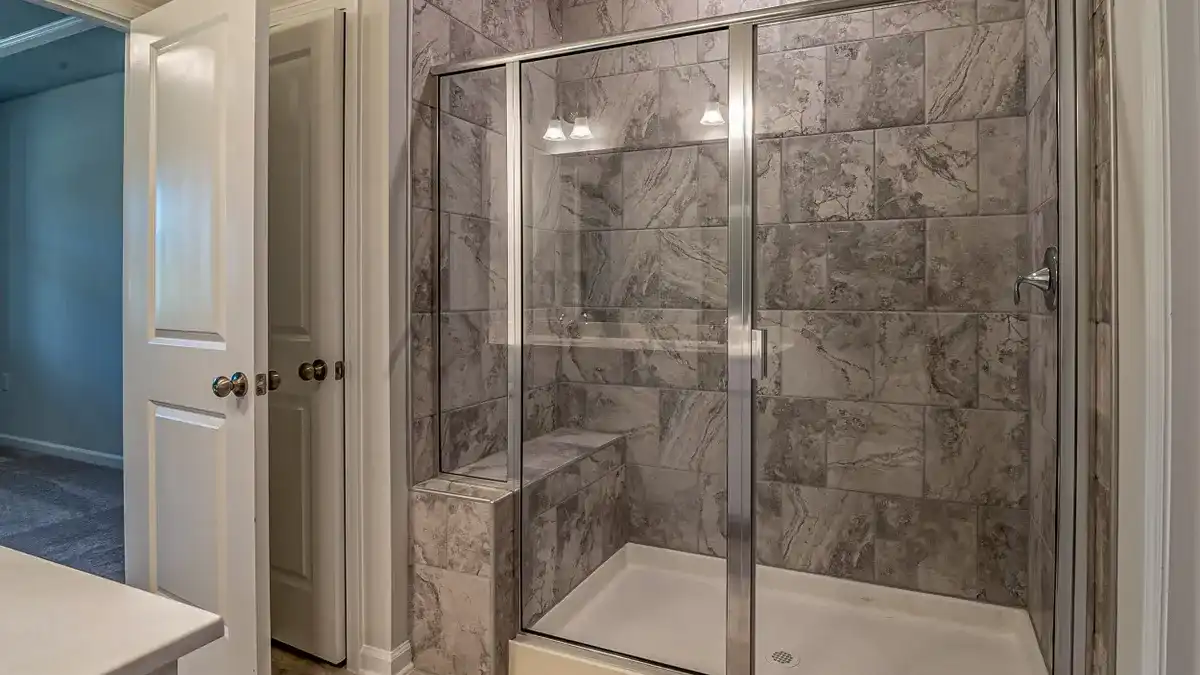
- #1 Best Overall: Sliding barn-door shower enclosure — best for the tightest rooms because it keeps the door path inside the opening.
- #2 Best Budget Pick: Bypass-style sliding enclosure — best when you want sliding function without the heavier look of a single barn-style panel.
- #3 Best Heavy-Duty / Upgrade Pick: Pivot hinge door — best when the opening is clear and you want a cleaner walk-in feel with fewer track parts.
| Product / Option | Best For | Core Spec | Standout Feature | Action |
|---|---|---|---|---|
| Sliding barn-door shower enclosure | Bathrooms with vanity obstruction or toilet clearance problems | Top roller bar; one moving panel along a wall-jamb-supported track | Keeps swing out of the floor path | Choose if the room cannot spare a door arc |
| Bypass shower door track | Very narrow openings that need two moving panels | Two-panel sliding track system | Lets one panel overlap the other | Choose if you need sliding access in a compact footprint |
| Pivot hinge door | Rooms with open floor space in front of the shower | Hinged panel with a swing radius | Simple entry and a cleaner look | Choose if the vanity and toilet leave a clear swing lane |
What actually changes between these two door types?
Sliding barn-door shower enclosures win on clearance; pivot hinge doors win on access and simplicity. That is the whole decision in one line, but the reasons matter because a wall jamb, a top roller bar, and a swing radius solve different problems.
A sliding system moves parallel to the shower opening, so the door never needs a clear arc in the bathroom. A pivot door, by contrast, needs room to swing, even if the panel feels light and easy to use.
Not the same problem.
- Sliding barn-door: best when the vanity, toilet, or towel bar sits too close to the shower front.
- Pivot hinge: best when the bathroom has open floor space in front of the shower opening.
- Bypass track: best when you need two moving panels, not one swinging panel.
Here’s the catch: sliding hardware saves floor clearance, but it can add track and roller parts that need clean alignment. Pivot doors reduce that hardware complexity, but they demand room every time the door opens.
For the bigger replacement map, this decision sits inside the shower door replacement guide, where layout and opening size drive the whole project.
Sliding barn-door shower enclosures: who should actually use them
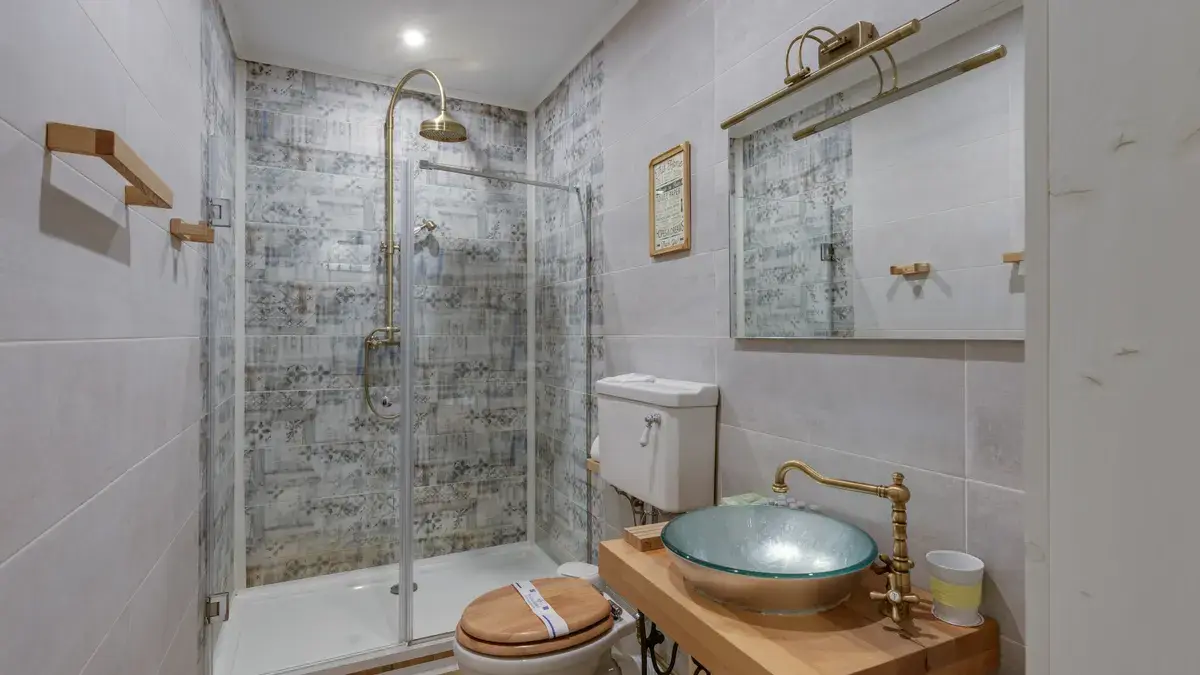
Sliding barn-door shower enclosures win for small bathrooms that already feel crowded at the front of the shower. If the vanity edge, toilet tank, or door trim sits in the way, a sliding panel is usually the cleaner fit because it avoids a floor swing altogether.
That matters fast.
The best part is that the door stays in its lane. A top roller bar carries the panel, and the opening remains usable even when the rest of the room is tight. That makes this style a strong match for a vanity obstruction or a shower entrance that opens into a cramped walkway.
Pros:
- No swing arc into the room.
- Good fit when the shower sits close to a vanity or toilet.
- Works well when the room has a narrow aisle.
Cons:
- Track and roller hardware need correct installation.
- The opening can feel less open than a pivot door.
- Some designs leave more metal in view, which is not ideal if you want a very light look.
Who Should Skip This: skip the sliding barn-door style if you have generous clearance in front of the shower and want the cleanest possible entry; a pivot hinge door will usually feel easier to walk through.
Buy this if: you have a tight bathroom, a vanity close to the shower front, or a toilet that blocks a door swing.
Skip this if: you have clear floor space and prefer the least complicated moving parts.
Pivot hinge doors: where they win, and where they don’t
Pivot hinge doors win when the bathroom gives the shower room to breathe. If the space in front of the opening is open, a pivot door feels straightforward because it swings into that empty zone instead of sliding beside the wall.
That is the advantage.
A pivot door also looks less mechanical than a track-based slider. With fewer visible rails, it can make the shower front read cleaner. But that clean look comes with a hard requirement: the door swing clearance has to be real, not theoretical. A hinge door that kisses the vanity or clips the toilet is a bad door, not a near miss.
Pros:
- Cleaner front profile than a track-heavy slider.
- Easier pass-through when swing space is open.
- Fewer visible moving parts than a bypass system.
Cons:
- Needs floor clearance in front of the opening.
- Can block the vanity or toilet in a small room.
- Poor fit for tight layouts with a narrow walkway.
Who Should Skip This: skip the pivot hinge door if the vanity front or toilet bowl sits close to the shower opening; a sliding barn-door shower enclosure is the safer choice in that layout.
Buy this if: you have a wider bathroom front, a clear swing lane, and want a simple door motion.
Skip this if: the shower opens into a tight aisle or a vanity sits directly in the way.
The honest side-by-side
Sliding barn-door shower enclosures are better for obstruction control, while pivot hinge doors are better for open-plan feel. That is the practical split, not a style opinion. The table below shows where each one wins when the room gets real.
| Criteria | Sliding Barn-Door Shower Enclosure | Pivot Hinge Door | Winner for tight spaces |
|---|---|---|---|
| Floor clearance | No swing into the room | Needs a swing arc | Sliding barn-door |
| Vanity obstruction | Better around a close vanity front | Can hit the vanity | Sliding barn-door |
| Toilet clearance | Usually safer in narrow layouts | Can block the toilet zone | Sliding barn-door |
| Hardware visibility | More visible track and rollers | Less visible hardware | Pivot hinge |
| Entry feel | Can feel narrower at the opening | Often feels more open | Pivot hinge |
| Installation tolerance | Needs accurate track alignment | Needs hinge alignment and clear swing space | Tie |
| Cleaning around the door | More track parts to wipe | Fewer track surfaces | Pivot hinge |
| Best use case | Cramped rooms, narrow aisles | Open rooms, clear front zone | Sliding barn-door |
| Risk if misfit | Track still fits, but the look may feel bulky | Door collides with fixtures | Sliding barn-door |
The truth is, this is not a close call for very tight rooms. If a vanity obstruction already exists, the sliding option solves the exact problem you have. If the floor in front of the shower is free, the pivot door may feel better day to day.
Why a bypass shower door track changes the answer
A bypass shower door track is the middle case: it slides, but it usually means two panels instead of one. That matters because some bathrooms need the no-swing benefit of sliding hardware without the look of a single barn-style panel.
Middle ground, not magic.
This setup can be the better call when the opening is wide enough for overlap but the room still has clearance limits. It can also work when you want access from either side of the opening. The trade-off is obvious: more moving parts, more track length, and more hardware to keep aligned.
Use bypass-style sliding when:
- the opening is wider than a single fixed-panel layout can handle,
- the bathroom still cannot spare a swing arc,
- you want a sliding system but not a barn-door look.
Avoid bypass when:
- you want the simplest possible mechanism,
- you hate exposed track hardware,
- you have a very small opening and want the fewest parts.
The main reason a generic article gets this wrong is that it treats all sliding doors as one thing. They are not. A bypass track and a single-panel barn-door setup solve similar clearance problems, but they do it with different hardware and different visual weight. If the layout is borderline, consult a qualified installer or designer and check the NKBA bathroom planning guidance and the ADA Standards for Accessible Design.
When the verdict flips
Sliding barn-door shower enclosures still win the broad small-space matchup, but there are four cases where the answer changes. These are the exceptions that save bad purchases.
-
The shower opening has open floor space in front of it.
If the bathroom is small but the front zone is clear, a pivot hinge door may be the better everyday choice. -
The vanity is set far enough away from the opening.
When the vanity obstruction is not actually an obstruction, the swing door’s cleaner entry can beat the slider. -
You want the lightest visual frame.
If you care more about a minimal front view than about clearance, pivot hardware usually looks simpler. -
The shower front must stay easy for frequent use.
If the opening gets used many times a day, the smoother pass-through of a pivot door can matter more than saving a few inches of swing room.
The flip side is just as important: if any of those conditions are false, the sliding door keeps its lead.
The Verdict: which one should you choose?
Choose sliding barn-door shower enclosures if your bathroom has a vanity obstruction, a tight aisle, or no safe door swing. Choose pivot hinge doors if the floor in front of the shower is open and you want the simplest entry. Neither if the opening is too awkward for either style and the layout needs a different enclosure plan.
That is the clean recommendation. Sliding wins the tight-space contest because it solves clearance first. Pivot wins only when clearance is already available and a swing door can work without fighting the room.
Drafted with AI; not yet reviewed by a person.



[…] Sliding Barn-Door Shower Enclosures […]